
Home / Body Contouring / Arm Lift/Reduction
Arm Lift/ Reduction Surgery
Arm lift surgery, also known as brachioplasty, is designed to remove excess skin and fat from the upper arms. This procedure helps achieve a more toned and contoured appearance of the arms.
Key Info
-
Duration:
2 hours -
Anaesthesia:
General anaesthetic -
Admission:
1 overnight stay -
Locations:
Chelmsford, Brentwood
& Colchester
Recovery
- 2 - 6 weeks off work
- No driving for up to 4 weeks
- No exercise or vigorous activity for 6 weeks
- Follow-Up Appointments:
- 1 & 6 weeks
- 3 & 6 months
Potential Risks & Complications of Surgery
Like any surgery, the arm lift/reduction surgery procedure poses both frequent and infrequent risks for patients.
Frequent: Bruising, swelling, tightness, and altered sensation in the upper arm.
Infrequent: Infection, delayed wound healing, bleeding, poor scarring, asymmetry, seroma, under- or overcorrection.
the first step of your journey
Let's Get Started
With a Consultation
As the first step of your journey, we like to see every cosmetic patient for a relaxed and personal consultation to discuss all aspects of your procedure.
Fill in and submit our enquiry form to get started.

Or Contact the Mat Griffiths Team Directly:
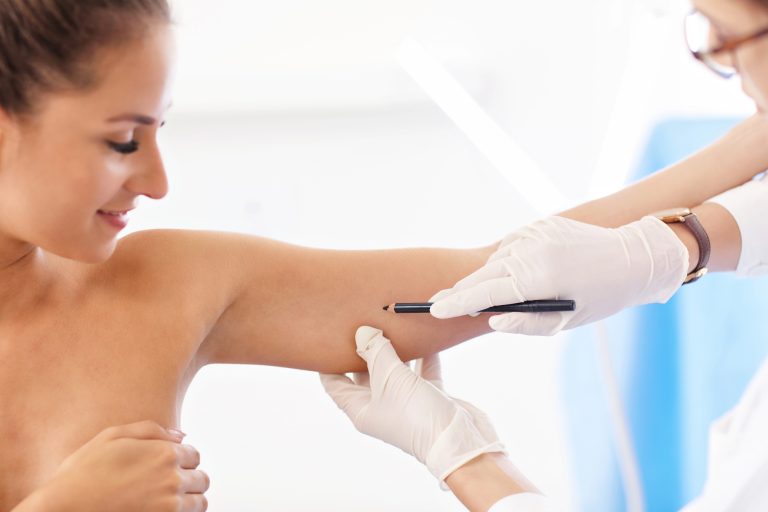
Brachioplasty Surgery: What to Expect
Brachioplasty surgery, or arm reduction, is a popular solution for individuals looking to remove sagging skin or stubborn arm fat.
This surgery is especially beneficial for those who have experienced significant weight loss and are left with excess skin. During your consultation, Mat will discuss your goals, the surgery process, and what results you can expect.
Mat Griffiths specialises in arm fat removal and will outline the available options, potential risks, and benefits of this procedure. You’ll receive personalised advice to ensure that Brachioplasty surgery is right for you, all while ensuring your comfort and confidence in your decision.
Arm Lift Surgery on Finance | Brachioplasty Finance
Finance Options Available
Finance options are available at select locations. Please enquire with our team for more information on available plans.
Arm Lift (Brachioplasty) Surgery in Essex
What Happens During Arm Lift Surgery?
Arm lift surgery is performed under general anaesthetic and typically takes around two hours.
During the procedure, excess skin and fat are removed from the upper arm, between the armpit and elbow. The remaining skin is then tightened to create a smoother, more defined appearance.
After surgery, your arms will be bandaged to reduce swelling, promoting a smooth recovery.
Frequently Asked Questions
We’ve compiled the most frequently asked questions around arm lift surgery and organised them in a single, easy-to-read section.
By providing clear, straightforward answers, we aim to give you the information you need to feel confident and reassured before making any decisions about surgery.
This means less time searching for answers, more time focusing on your goals, and a smoother journey from first consultation to feeling confident in your results.
Are there any risks from arm lift surgery?
As with any surgical procedure, an arm lift carries some potential risks. Bruising and swelling are common in the early stages of recovery and typically subside over time.
Less common complications can include infection, bleeding, wound healing problems, thickened scars, nerve injury, or blood clots such as deep vein thrombosis or pulmonary embolism.
All of these risks will be carefully explained and discussed with Mr. Griffiths before your surgery, and every precaution will be taken to ensure your safety.
How long does arm lift surgery take?
The procedure typically takes 2–3 hours, depending on the amount of skin and tissue being removed, as well as whether any additional procedures are being performed simultaneously.
How long will I stay in the hospital?
Most patients stay in the hospital for one night after arm lift surgery. This allows for close monitoring and ensures you are comfortable before going home.
What is the recovery period after arm lift surgery?
Most patients take about 2 weeks off work to rest and heal. Strenuous activities, especially those involving lifting or upper-body exercises, should be avoided for at least six weeks.
Swelling and bruising will gradually improve, and results continue to refine over the following months.
Contact the
Mat Griffiths Team
If you have a general question or enquiry about our services, please contact our team directly.